

Most parents I speak to are not short of good intentions for their children. They want more reading, less screen time, calmer mornings and earlier nights. The problem is rarely knowing what to do. It is making it happen every day, without nagging, and keeping it going once the novelty wears off.
That is where habits come in. At The Warrior Academy we have spent years helping children build discipline through small, repeatable actions. What follows is the simple system we share with families: no apps, no complicated rewards, just a few clear steps that work for children from four years old upwards.
Why habits beat willpower
Willpower is like a battery. By the end of a long school day, most children (and most adults) have very little left. Habits are different. Once something becomes a habit, it takes almost no effort, because it happens automatically, in the same order, at the same time.
That is why we focus on habits rather than motivation. A child does not need to feel like brushing their teeth. They just do it, because it is what happens after breakfast. Our aim is to make the good things in a child’s day work the same way. It also ties directly into our three Cs: confidence, conduct and concentration all grow when a child’s day has a steady rhythm.
Step one: build a morning and evening routine
Start with the two moments that shape every day: getting up and going to bed. Keep each routine short, the same every day, and in a fixed order.
A simple morning routine
- Get up and make the bed.
- Get dressed.
- Breakfast and a glass of water.
- Brush teeth.
- Check the bag is packed and shoes are by the door.
A simple evening routine
- Pack the bag for tomorrow, including any kit.
- Screens off.
- Bath or shower and teeth.
- Ten minutes of reading.
- Three things I did well today, then lights out.
For younger children, three or four steps is plenty. Older children can add more, like practising patterns or a few minutes of stretching. The important part is that the order never changes.
Step two: stack new habits onto old ones
Habit stacking simply means attaching a new habit to something your child already does every day. Instead of “remember to practise your kicks”, it becomes “after I brush my teeth in the evening, I do ten kicks on each leg”.
Some stacks that work well for families:
- After I take my shoes off from school, I put my bag in its place.
- After breakfast, I put my bowl in the dishwasher.
- After I put my pyjamas on, I read for ten minutes.
- After my session, I hang my uniform up straight away.
The existing habit acts as a trigger. Your child does not need to remember, because one action leads to the next.
Step three: make it visible with a habit chart
Children respond to what they can see. A simple chart on the fridge or bedroom door, with the daily habits down one side and the days of the week across the top, makes progress real.
- Keep it short: three to five habits at a time is enough.
- Let your child tick it: the act of ticking the box is a small reward in itself.
- Use pictures for younger children: a toothbrush, a book, a bed. Non-readers can still own their chart.
- Review it together weekly: look back on Sunday and talk about what went well.
Step four: celebrate small wins and aim for consistency
The biggest mistake families make is aiming for perfection. A child who misses one evening of reading and decides “I have ruined it” will often give up altogether. We teach the opposite: consistency over perfection.
Never miss twice
Missing one day happens to everyone. The rule is simple: never miss twice in a row. If reading did not happen on Tuesday, it happens on Wednesday, no drama.
Notice the small wins
Praise the effort and the streak, not just the end result. “You have made your bed every day this week” is far more powerful than a big reward at the end of a month. Small wins build the belief that “I am someone who does this”, and that belief is what makes a habit stick.
Start smaller than you think
If a habit keeps failing, make it smaller. Two minutes of reading is better than a planned twenty that never happens. Once the habit is steady, it can grow.
How belt targets keep motivation going
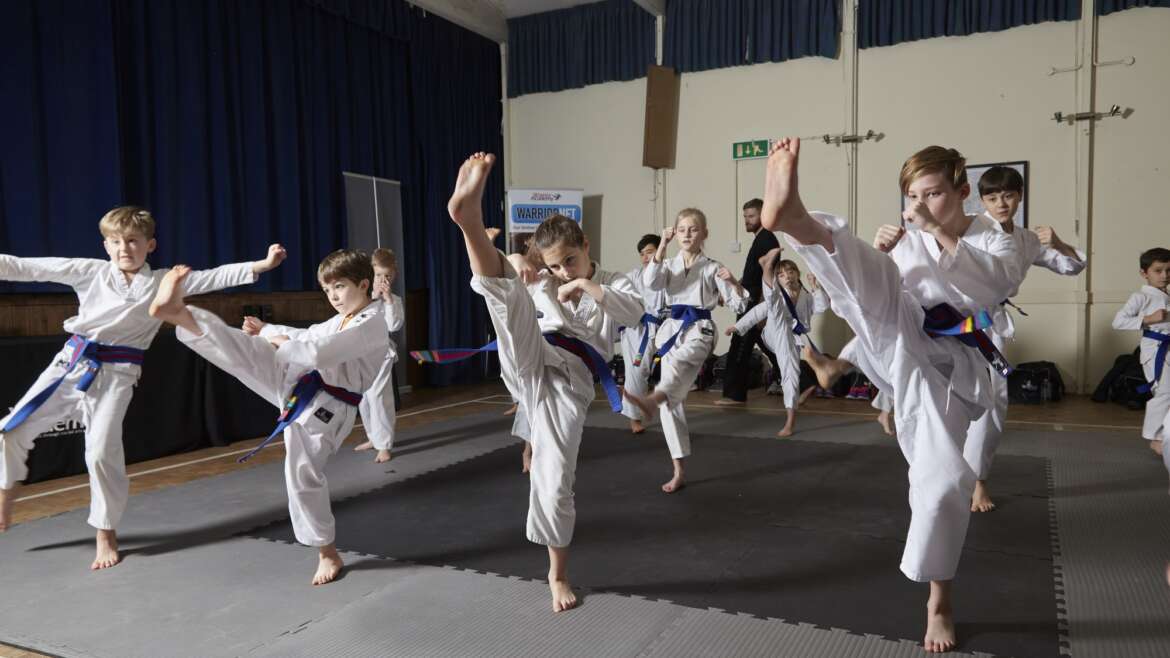
This is where martial arts gives children an advantage. At The Warrior Academy, children earn coloured belts through gradings, all the way to black belt. Each belt is a clear, visible target, and working towards it gives daily habits a purpose.
A child who knows their next grading is coming up has a real reason to practise their pattern after tea, stretch before bed and get to every session on time. When they pass, they see for themselves that small daily efforts add up to something big. That lesson carries far beyond the dojo, into schoolwork, music, sport and, later, adult life.
Our instructors talk about habits with students regularly, and we encourage parents to link the habit chart to belt goals: for example, a practice box on the chart for every day of the week before a grading.
Putting the system into practice
Habits are easier to build with support around you. Our programmes give children a weekly rhythm, clear goals and instructors who reinforce the same messages you are using at home. Families join us at clubs including Rode for Frome and Trowbridge, Corsham near Chippenham, and Bath at Combe Down.
If you would like to see how it works, the first step is easy. Book a free taster and come along to a session.
Key takeaways
- Habits beat willpower because they happen automatically, in the same order every day.
- Start with a short morning and evening routine that never changes.
- Stack new habits onto old ones and track them on a visible chart.
- Aim for consistency over perfection: never miss twice.
- Belt targets give daily habits a clear purpose and keep motivation high.
Find your nearest club
Martial arts and character development programmes for children aged 4 and up, across Wiltshire, Somerset, Bath and North Dorset.
Try a free taster
See how The Warrior Academy builds confidence, focus and respect in children aged 4 and up, at our Salisbury centre and clubs across Wiltshire, Somerset, Bath and North Dorset.
Book a free tasterMore from the blog