October half term is often the week parents finally sit down and ask the question that has been on the list since September: should we try a martial art? Then comes the harder question. Which one?
Search for children’s martial arts near you and you will find karate, taekwondo, kickboxing, Brazilian jiu-jitsu and plenty of names you may not recognise. This guide explains what each style involves, what really matters when you choose, and the questions worth asking any club before your child steps on the mat.
The main styles, in plain English
Karate
Karate is a striking art from Japan. Children learn stances, blocks, punches and kicks, and practise set sequences called kata. It is known for its structure and etiquette, which many parents like because it gives children a clear sense of how to behave.
Taekwondo
Taekwondo comes from Korea and is famous for kicking, including the high and spinning kicks children love to show off at home. It builds flexibility, balance and coordination.
Kickboxing
Kickboxing combines punches and kicks with lots of fitness work. It tends to feel energetic and modern, and it suits children who like to move and get a sweat on.
Brazilian jiu-jitsu (BJJ)
BJJ is a grappling art. Instead of striking, children learn to control a partner, escape holds and stay calm when someone is close to them. Parents of children who worry about playground scuffles often find this reassuring, because it teaches control rather than hitting.
Freestyle martial arts
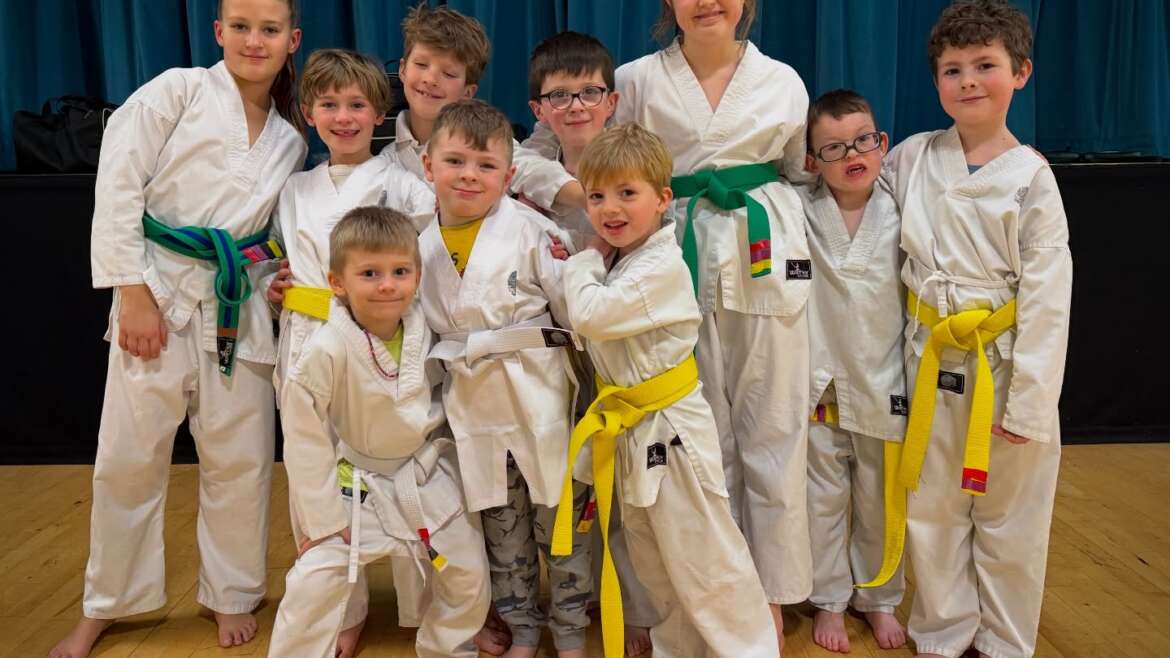
Some academies, including The Warrior Academy, teach a freestyle programme that draws on several of these arts. Children learn striking, kicking and grappling skills in one progressive syllabus, so they get the structure of karate, the movement of taekwondo, the energy of kickboxing and the calm control of jiu-jitsu without having to pick just one at the age of five.
Why the style matters less than you think
Here is the honest truth from people who have taught children for a long time: for a young child, the style on the sign outside matters far less than what happens inside. A brilliant karate club and a poor karate club can look completely different. The things that shape your child’s experience are the instructors, the size of the group, the structure of each session and what the club is really trying to teach.
Our founder Seb Bates put it simply in an interview: “We use martial arts as a vehicle to give kids a black belt in character.” The kicks and punches matter, but they are the vehicle, not the destination.
What to look for in any children’s programme
- Age-appropriate groups. A four year old and a nine year old need very different sessions. Look for separate groups by age and stage. At The Warrior Academy, Juniors are 4 to 6, Seniors are 7 to 9, and older children move into Advanced by grade.
- Small groups. Children learn faster and behave better when an instructor can see them. Our groups are capped at 19.
- A clear syllabus. Your child should know what they are working towards next, and so should you.
- Grading that is earned. Belts handed out for turning up teach very little. Belts earned through effort and behaviour teach a great deal.
- Character teaching. Ask how the club teaches respect, focus and self-control. Our instructors teach a short Mat Chat in every session, built around the 3 Cs: confidence, conduct and concentration.
- Safeguarding. The NSPCC’s Child Protection in Sport Unit has a useful parents’ charter on what to look for in a sports club, covering safeguarding policies, health and safety and safer recruitment of staff. It is worth reading before you choose any activity.
Questions to ask before you sign up
- How are the groups split by age and ability?
- How many children are in each session, and how many instructors?
- How does my child move up a belt, and what happens if they are not ready?
- What do you teach about behaviour, kindness and self-control?
- Can my child try a session first, for free, before we commit?
A good club will answer all five happily. If you get vague answers, keep looking.
Matching the art to your child
Every child is different, so think about yours:
- The shy child needs a warm, patient instructor and a group where they will not be lost in the crowd.
- The bundle of energy needs plenty of movement and clear boundaries, so the energy goes somewhere useful.
- The worrier benefits from calm, controlled practice and small wins every week.
- The sporty child will love the challenge of grading and, later, competitions.
A broad freestyle programme suits all four, because it gives each child something to be good at early on.
It counts towards their activity too
The NHS guidance for children aged 5 to 18 recommends an average of at least 60 minutes of moderate or vigorous activity a day across the week, plus activities that strengthen muscles and bones. Martial arts is one of the examples the NHS physical activity guidelines give for that strengthening work, alongside gymnastics and jumping.
Where to try it locally
The Warrior Academy runs programmes across Wiltshire, Somerset, Bath and North Dorset, all term time:
- Salisbury HQ, the Character Development Centre at High Post (Monday to Thursday)
- Bath, at Monkton Prep School in Combe Down (Fridays)
- Freshford Village Memorial Hall (Tuesdays)
- Rode Memorial Hall, for Frome and Trowbridge (Thursdays)
- Motcombe Memorial Hall, for Shaftesbury and Gillingham (Fridays)
- Corsham Primary School (Mondays)
The best way to choose: try it
You can read about martial arts all week, but nothing beats watching your child’s face at the end of a first session. If you are weighing up options this half term, you are very welcome to book a free taster session at your nearest club once schools are back. Our team will match your child to the right programme and give you an honest view on whether it is a good fit.
Frequently asked questions
What is the best martial art for a young child?
For children aged 4 to 9, the quality of the instructors, the group size and the structure of each session matter more than the style. A freestyle programme that blends striking, kicking and grappling gives young children a broad base and lets them find what they enjoy.
Is karate or taekwondo better for kids?
Both are excellent. Karate is known for structure and etiquette, taekwondo for kicking, flexibility and balance. The Warrior Academy teaches a freestyle programme that includes elements of both, along with kickboxing and jiu-jitsu.
What age can my child start martial arts at The Warrior Academy?
Juniors start at age 4. Juniors are 4 to 6, Seniors are 7 to 9, and older children move into Advanced by grade.
Can my child try a session before we commit?
Yes. Every new child starts with a free taster session, after which our team will match them to the right programme.
Do martial arts sessions run in half term?
Our programmes run in term time. Members receive the holiday timetable by email, and new families can book a free taster for after half term.
Find your nearest club
Martial arts and character development programmes for children aged 4 and up, across Wiltshire, Somerset, Bath and North Dorset.
Try a free taster
See how The Warrior Academy builds confidence, focus and respect in children aged 4 and up, at our Salisbury centre and clubs across Wiltshire, Somerset, Bath and North Dorset.
Book a free tasterMore from the blog