

To help a child with anxiety, start by taking the worry seriously without letting it make every decision. Listen, name the feeling, and then help them face what frightens them in small, manageable steps rather than avoiding it altogether. Calm routines, good sleep, plenty of exercise and simple breathing techniques all make a real difference.
Most children worry, and a certain amount of worry is healthy. It keeps them careful near roads and helps them prepare for a test. Anxiety becomes a problem when it is out of proportion, hangs around for weeks, or starts to stop a child doing the ordinary things in their life.
This guide covers how to tell the difference, the signs to look for, what actually helps at home and when to get professional support.
Normal worry or anxiety that needs help?
Children go through predictable worries as they grow. Little ones fear the dark, monsters or being separated from mum or dad. Primary school children often worry about friendships, getting things wrong or something bad happening to someone they love. Older children worry about how they look, fitting in and the move to secondary school.
Ordinary worry tends to come and go, matches the situation and settles with reassurance. Anxiety that needs more support usually looks different:
- It is far bigger than the situation calls for.
- It lasts for weeks rather than days.
- Reassurance helps for a moment, then the worry comes straight back.
- It starts to get in the way of school, sleep, eating, friendships or activities they used to enjoy.
Signs your child may be anxious
Children rarely say “I feel anxious”. Instead it shows up in their body and their behaviour. Look out for:
- Physical complaints: tummy aches, headaches or feeling sick, especially on school mornings or before a particular event.
- Sleep problems: struggling to fall asleep, waking in the night or wanting to sleep in your bed.
- Avoidance: making excuses not to go to school, parties or clubs, or refusing to try new things.
- Constant questions: “What if…?” over and over, or needing to know exactly what will happen.
- Clinginess, tears or anger: anxiety often comes out as irritability or meltdowns, particularly at transition times.
Keep a few notes for a week or two. Patterns, such as worse on Sunday nights or before swimming, help you understand what is going on and are useful if you do need to speak to someone.
Validate the feeling, then make a plan
When your child is worried, the most helpful first step is to show you understand. “It sounds like you’re really worried about the school trip. That’s a horrible feeling.” Avoid “don’t be silly” or “there’s nothing to worry about”. To your child, the worry feels very real, and dismissing it teaches them to stop telling you.
Once they feel heard, move gently to a plan. Ask, “What’s the bit that worries you most?” and “What could we do that would help?” Children feel braver when they have a plan for the hard bit: who they can go to, what they will say, what they will do if they feel wobbly.
Help them face fears in small steps
It is completely natural to want to remove everything that frightens your child. The trouble is that avoidance makes anxiety grow. Each time a child avoids something scary, their brain learns that the thing really was dangerous, and the fear gets a little bigger.
The better approach is a ladder of small, brave steps. If your child is anxious about going to a birthday party, for example:
- Talk about the party and what will happen there.
- Drive past the venue together.
- Go along and stay with them for the first part.
- Stay for a shorter time, or wait nearby.
- Drop them off and pick them up at the end.
Let your child have a say in the steps and move at a pace that stretches them without overwhelming them. Expect some steps to take longer than others.
Build calm into everyday life
An anxious brain copes better when the basics are in place.
- Predictable routines: regular times for meals, homework and bed help children feel safe. Give warning of changes where you can.
- Sleep: a calm wind down, screens out of the bedroom and a consistent bedtime.
- Exercise: physical activity is one of the most effective ways to burn off nervous energy and lift mood.
- Breathing: teach slow breathing at calm times, such as breathing in for four, holding briefly and breathing out slowly, so it is ready when worry hits.
- Worry time: some children find it helps to save worries for a short, set time each day to talk them through with you.
Praise brave behaviour
Notice and praise effort, not just outcomes. “I could see you were nervous about going in, and you did it anyway. That was really brave.” Children begin to see themselves as someone who can do hard things, and that belief is the real antidote to anxiety.
Look after your own worry too. Children pick up on our anxiety very quickly. You do not need to pretend everything is perfect, but a calm, confident “I think you can do this, and I’m here” goes a long way.
When to speak to your GP or school
Please do not wait if your child’s anxiety is stopping them from going to school, sleeping or eating properly, or if it has lasted for several weeks despite your support. Speak to your GP and to your child’s school, who can offer support and, if needed, refer you to specialist services. If your child talks about harming themselves, seek help from your GP straight away, or call 999 in an emergency. Getting help early is a sign of good parenting, not failure.
How martial arts helps children with anxiety
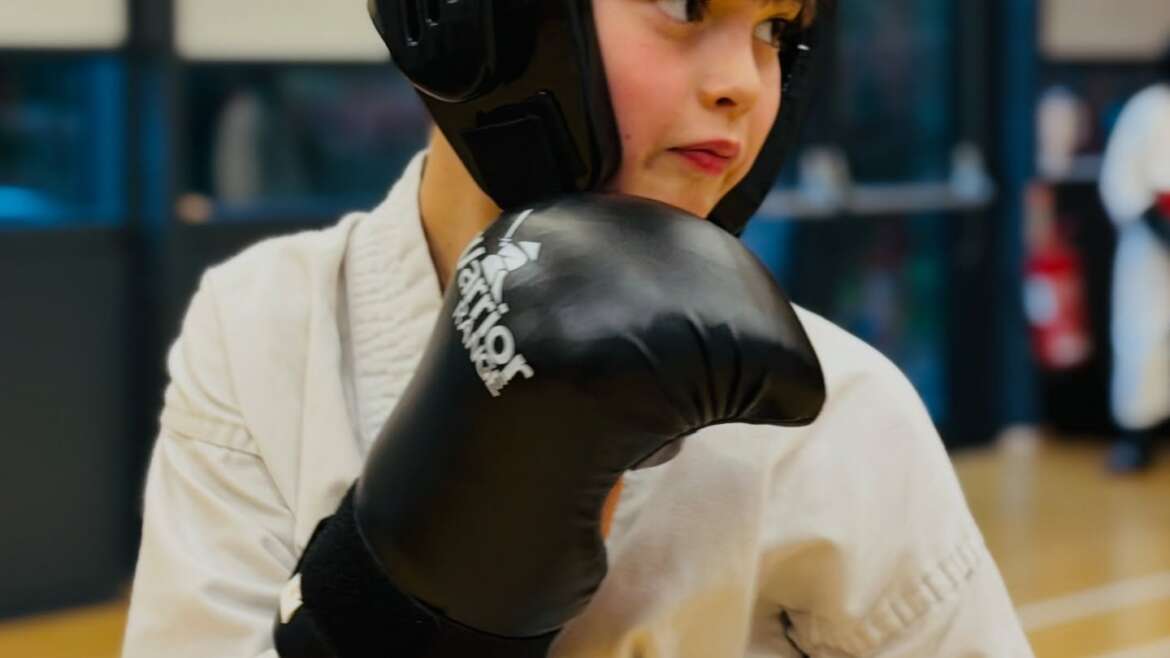
For many anxious children, a structured, encouraging activity outside school is a turning point. Martial arts gives them a safe place to practise being brave in small steps: stepping onto the mat, speaking up with a loud, confident voice, trying a new technique in front of others and building up to a grading for their next belt. Every small win adds to their sense of “I can”.
Confidence is the first of our three Cs, alongside conduct and concentration, and our instructors are used to welcoming children who are shy or worried. We start gently and celebrate every brave step. Our programmes for children aged four and up run in Bath at Monkton Prep School in Combe Down, in Freshford, close to Bradford on Avon, and at Rode, near Frome and Trowbridge. A free taster session is a low pressure way to see if it suits your child, and you are welcome to stay and watch.
Key takeaways
- Some worry is normal; anxiety needs more support when it is out of proportion, lasts weeks or stops everyday life.
- Watch for tummy aches, poor sleep and avoidance, as children rarely name anxiety directly.
- Validate the feeling first, then make a plan together.
- Help your child face fears in small steps rather than avoiding them, and praise every brave try.
- Speak to your GP or school if anxiety is stopping your child going to school, sleeping or eating.
Find your nearest club
Martial arts and character development programmes for children aged 4 and up, across Wiltshire, Somerset, Bath and North Dorset.
Try a free taster
See how The Warrior Academy builds confidence, focus and respect in children aged 4 and up, at our Salisbury centre and clubs across Wiltshire, Somerset, Bath and North Dorset.
Book a free tasterMore from the blog