

Bullies do not usually target children because they are weak. They target children who look uncertain. The child who walks into the playground quietly, shoulders slumped and eyes on the floor sends a signal that they will not push back, and that is what a bully looks for.
That is good news, because uncertainty can be changed. If your child has been picked on and you have found yourself wondering “is my child weak?”, the answer is almost certainly no. They have not yet learned how to show the confidence they already have inside. Posture, presence and a few calm, practised responses can change how other children treat them, often quite quickly.
Bullies look for uncertainty, not weakness
Think about how a child who bullies chooses who to pick on. They want a reaction without a risk. They are looking for someone who will go quiet, look upset or give in. Size, strength and cleverness have very little to do with it. I have seen tall, sporty children targeted and small, quiet children left completely alone.
The difference is usually how a child carries themselves and how they respond the first time someone tests them. Signs of uncertainty include:
- Walking with the head down and shoulders rounded
- Avoiding eye contact
- Speaking very quietly or mumbling
- Freezing, crying or over-reacting when teased
- Staying on the edges of groups and spaces
None of these mean something is wrong with your child. They are habits, and habits can be practised into new ones.
Why fixing the environment is not enough
When a child is being bullied, parents are often told to fix the environment: call the teacher, move classes, even change schools. Sometimes those steps are right, and you should always tell the school and keep a record of what has happened. If there is any physical harm or threats, involve the school straight away and the police where needed.
But changing the environment alone rarely solves the problem. A child who walks into a new school with the same slumped shoulders and the same uncertainty can find the same thing happening again. Confidence is built by preparation, not comfort. Protecting children from every difficult moment can leave them feeling more fragile. Preparing them to handle those moments makes them stronger.
Posture, presence and calm responses
In our programmes I see children transform how others treat them by working on three things.
Posture
Standing tall, shoulders back, chin up and feet planted. It sounds simple, yet it changes how a child feels as well as how they look. A child who stands like they belong is far less likely to be chosen.
Presence
Presence is about eye contact and voice. Looking someone in the eye for a moment and speaking clearly tells them, “I am not an easy target.” Your child does not need to be loud or aggressive, just steady.
Calm, practised responses
Give your child two or three short lines they can use without thinking, such as “Stop, I don’t like that” or “That’s not okay.” Then they turn and walk calmly towards a friend or an adult. Short, assertive and non-escalating is the goal. The bully was hoping for a reaction and does not get one.
A five-minutes-a-day practice at home
You do not need hours. Five focused minutes a day, done consistently, will do more than one long talk. Here is a simple routine:
- Minute one: the power stance. Stand tall together in front of a mirror. Shoulders back, head up, feet apart. Hold it and breathe slowly.
- Minute two: the confident walk. Walk across the room and back as if walking into the playground. Head up, steady pace, looking ahead.
- Minute three: eye contact and voice. Take turns saying a short line to each other, such as “Please stop,” while holding eye contact and speaking clearly.
- Minute four: role-play. You play someone teasing them in a gentle way. They use their posture, their line and then walk away.
- Minute five: celebrate. Tell them one specific thing they did well. “Your voice was really clear that time” is better than “well done”.
Keep it playful. Swap roles sometimes so your child gets to see what confidence looks like from the outside. Over a few weeks, these responses start to become automatic.
Supporting your child after a tough day
How you respond when your child comes home upset can either build them up or quietly make them feel weaker. A few things help:
- Listen first. Let them talk before you offer solutions.
- Stay calm. If you look panicked or furious, they may learn the situation is bigger than they can handle.
- Avoid rescuing language. Instead of “poor you, I’ll sort it out”, try “that sounds hard. What could you try next time?”
- Notice what they did well. Even if they only stood their ground for a moment, point it out.
- Keep a log. Note dates and what happened so you can share facts with school if needed.
If your child’s worry stops them sleeping, eating or getting to school, speak to your GP and the school. Some children need extra support, and that is nothing to be ashamed of.
How martial arts helps children stop being a target
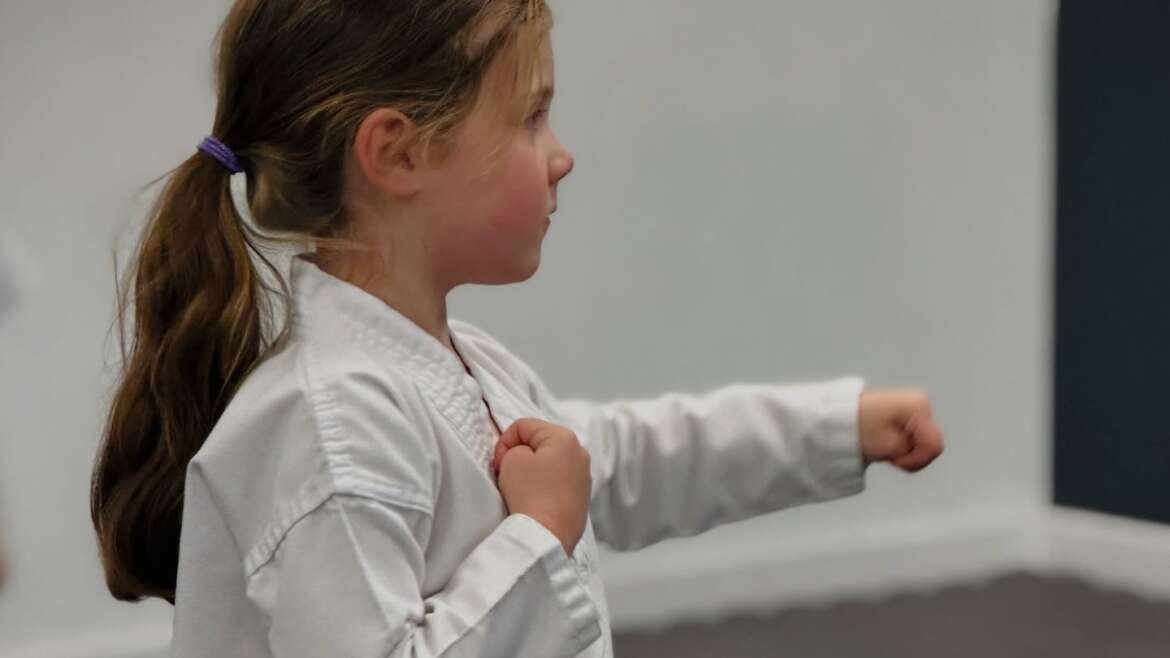
I was bullied as a child myself, which is why I wrote “Not a Victim” and started The Warrior Academy. Our martial arts and character development programmes for children aged 4 and up focus on the three Cs: confidence, conduct and concentration. Every session, children practise standing tall, using a strong voice, making eye contact and staying calm under pressure, in a safe and encouraging setting. Earning coloured belts through gradings shows them they can set a goal and reach it, which is a confidence that carries straight into the playground.
You will find our programmes in Corsham, for Chippenham families, in Motcombe, serving Shaftesbury and Gillingham, and at our Character Development Centre for Salisbury and Amesbury. If you would like to see the difference for yourself, book a free taster.
Key takeaways
- Bullies target uncertainty, not weakness, and uncertainty can be changed.
- Changing the environment helps, but preparation builds lasting confidence.
- Posture, presence and two or three calm lines make a child a much harder target.
- Five minutes of practice a day at home is enough to make a real difference.
- After a tough day, listen and encourage rather than rescue.
Find your nearest club
Martial arts and character development programmes for children aged 4 and up, across Wiltshire, Somerset, Bath and North Dorset.
Try a free taster
See how The Warrior Academy builds confidence, focus and respect in children aged 4 and up, at our Salisbury centre and clubs across Wiltshire, Somerset, Bath and North Dorset.
Book a free tasterMore from the blog