

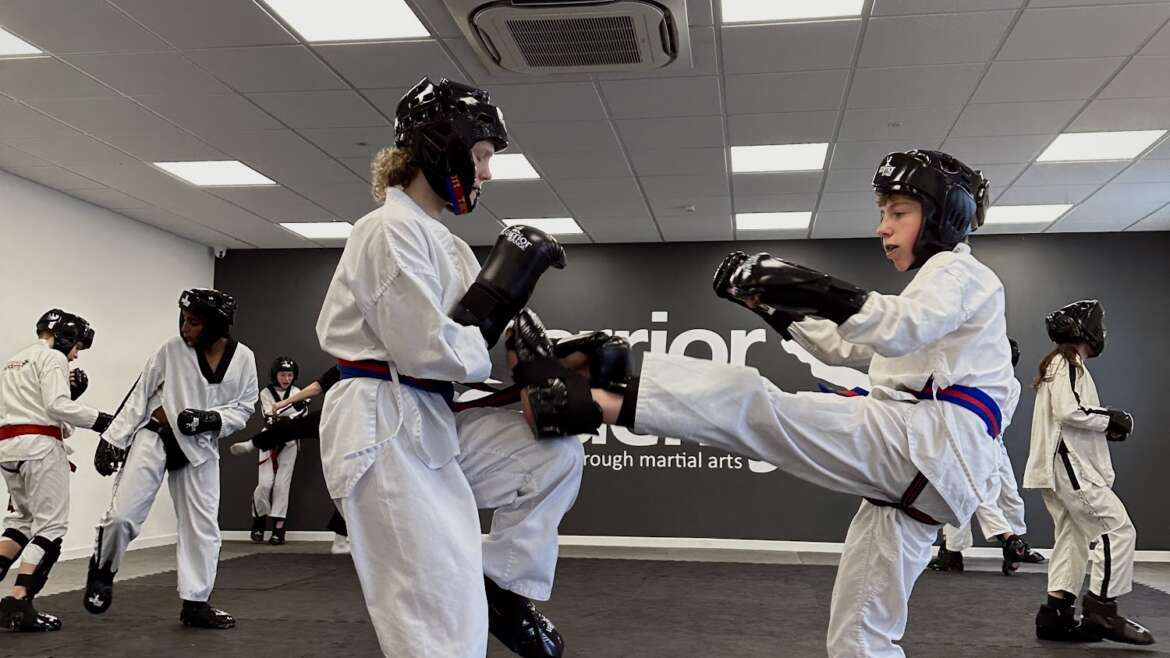
When parents tell me they want their child to be more confident, they rarely mean louder. They mean a child who can walk into a new classroom, try something difficult, speak up when something is wrong and cope when things do not go their way. That is what I call black belt confidence.
It is not something you can give a child in a single conversation. It is earned, step by step, through challenge and effort. In this article I will explain what it really means, how it is built and what you can do at home to help.
What black belt confidence really means
People sometimes imagine a black belt as someone tough and showy. In reality, the most confident martial artists I know are calm, humble and kind. They do not need to prove anything, because they have already proved it to themselves on the mat, over and over again.
Quiet, not loud
Real confidence does not shout. A child with black belt confidence does not need to be the centre of attention. They are comfortable in their own skin, whether they are leading a group or simply getting on with a task.
Earned, not given
Confidence based on praise alone is fragile. Confidence based on things a child has actually done is solid. Every challenge they have faced and overcome becomes part of the foundation.
Confident, not arrogant
Arrogance looks down on others. Confidence lifts them up. A confident child can admit a mistake, ask for help and celebrate a friend’s success, because their sense of worth does not depend on being better than anyone else.
How confidence is built, step by step
I was bullied as a child. Confidence did not arrive for me all at once. It grew slowly, through small wins that added up. That experience shaped the programme I built in Rode, Somerset, and it is the same path I see children follow today.
1. Challenge
Children cannot become confident about something they have never been tested on. They need challenges that stretch them, just beyond what they can comfortably do. Too easy and they learn nothing. Too hard and they give up. The sweet spot is a challenge that makes them a little uneasy but is achievable with effort.
2. Repetition
Doing something once is luck. Doing it a hundred times is skill. Repetition is not glamorous, but it is how techniques, habits and self-belief become automatic. A child who has practised a pattern many times can perform it under pressure, because their body already knows what to do.
3. Feedback
Honest, specific feedback helps children improve without feeling judged. “Your guard dropped there, keep your hands up” is useful. “That was bad” is not.
4. Testing
Finally, children need moments where they show what they can do in front of others. These moments feel big. Getting through them, and seeing that the preparation paid off, is where confidence makes its biggest jumps.
Why gradings matter so much
At The Warrior Academy, children earn coloured belts through gradings, all the way to black belt. A grading brings all four steps together. Children face a real challenge, they have repeated the techniques for weeks, their instructor has given them feedback, and on the day they step forward and show what they have learned.
For many children, a grading is the first time they have performed something in front of an audience under a little pressure. Walking off the mat with a new belt teaches them a lesson they will carry for life: “I prepared, I felt the pressure, and I did it anyway.”
Each belt is a stepping stone. By the time a child reaches black belt, they have proved that lesson to themselves many times over. That is why a black belt means so much more than a piece of fabric.
What parents can do at home
You do not need to be a martial artist to help your child build black belt confidence. Here are some practical things you can start this week.
- Let them do hard things. Resist the urge to rescue them from every struggle. Let them order their own food, call a relative or carry their own bag.
- Praise effort and character. “You kept trying even when it was difficult” builds more confidence than “you are a natural”.
- Talk about past wins. When they face something new, remind them of a time they were unsure and succeeded anyway.
- Model calm confidence. Let them see you try new things, make mistakes and keep going.
- Encourage regular practice. A few minutes a day between programmes builds the repetition that makes skills feel solid.
- Respect the nerves. Feeling uneasy before a grading or a school play is normal. Tell them it means they care, and that they can feel it and still step forward.
If your child’s anxiety seems to be stopping them from everyday things like going to school or seeing friends, it is worth speaking to their school or your GP for extra support.
How martial arts helps children build black belt confidence
Since 2011, The Warrior Academy has run small, personal programmes for children aged 4 and up, built on the three Cs: confidence, conduct and concentration. Because our groups are small, instructors know each child well and can set the right challenge at the right time.
Beyond regular sessions and gradings, our competitions and Advanced Training Days, including Summer Samurai and Winter Warrior, give children extra chances to stretch themselves in a supportive setting.
You can find us at Rode for Frome and Trowbridge, where it all started, at our Character Development Centre in Salisbury, and at Corsham near Chippenham, along with our other clubs. We are also launching after-school clubs from January 2027. The simplest first step is to book a free taster.
Key takeaways
- Black belt confidence is quiet and earned, never arrogant.
- It is built through challenge, repetition, feedback and testing.
- Gradings give children real moments to prove themselves under pressure.
- Parents help most by letting children do hard things and praising effort.
- Each belt is a stepping stone, so the journey matters as much as the black belt.
Find your nearest club
Martial arts and character development programmes for children aged 4 and up, across Wiltshire, Somerset, Bath and North Dorset.
Try a free taster
See how The Warrior Academy builds confidence, focus and respect in children aged 4 and up, at our Salisbury centre and clubs across Wiltshire, Somerset, Bath and North Dorset.
Book a free tasterMore from the blog