

You can help your child move from primary to secondary school by preparing the practical side early, talking openly about their worries, and keeping familiar routines and confidence boosters going through the change. Children who feel prepared, and who have something steady outside school, tend to settle far more quickly.
The jump from Year 6 to Year 7 is one of the biggest a child makes. They go from being the oldest in a small school to the youngest on a much bigger site, often with new friends to find and a lot more independence to manage. All this usually arrives just as the body and emotions start changing too.
When the move is handled well, most children thrive. When it is not, some can feel isolated, and their wellbeing and schoolwork can suffer. Here is how to give your child the best start.
Understand what is changing for your child
It helps to see the move through your child’s eyes. Several big changes arrive at once:
- From oldest to youngest. In Year 6 they were the role models. In Year 7 they are the smallest people in the corridor.
- A bigger site. Multiple buildings, room changes and a timetable can feel overwhelming at first.
- New friendship groups. Old friends may go to different schools or drift into new groups.
- More independence. Getting to school, organising kit and keeping track of homework become their job.
- Growing up. Biological and emotional changes can make them more sensitive, tired or moody.
None of this is a problem in itself. But knowing that a lot is changing helps you be patient when your child is unusually tired, tearful or short tempered in the first weeks.
Use the summer before to prepare
The summer holidays are the ideal time to remove as many unknowns as possible.
- Practise the journey. Walk it, cycle it or take the bus together, then let them try it with you a little way behind.
- Organise the kit. Label everything, and let them pack their own bag a few times so it becomes routine.
- Look at the timetable and site map when you have them, so the building feels familiar.
- Rebuild sleep routines in the last week or two so the first early mornings are not a shock.
- Agree the basics, such as phone rules, what to do if they get lost and who to contact if something goes wrong.
Talk through the worries
Most children have worries about secondary school, even if they do not say so. Common ones include getting lost, making friends, older students and harder work. Ask open questions such as “What are you most looking forward to, and what feels a bit tricky?” and listen without rushing to fix everything.
Share how you handled change yourself, and remind them that every other Year 7 is in the same position. Help them plan simple steps, like saying hello to the person next to them or joining one club in the first term. If worries grow into anxiety that stops your child functioning day to day, or you notice signs of self-harm, speak to the school and your GP straight away.
Keep confidence topped up outside school
A new school can knock even a confident child. Activities outside school give them somewhere they already feel capable while everything else is new. Keep up the hobbies and clubs they love, and resist the urge to drop everything to make room for homework in the first term.
Exercise is especially helpful. Regular physical activity lifts mood, lowers stress and helps children sleep, which makes everything else at school easier to cope with.
Keep respect and routine at home
When the school day feels unpredictable, home should feel steady. Keep regular mealtimes, bedtimes and a set time and place for homework. Expect respectful behaviour as usual, while allowing for extra tiredness. Routines give children a sense of control at a time when a lot feels out of their hands.
Stay connected through the first term
Keep talking once school starts. Car journeys, walks and bedtime are often better than a direct question at the kitchen table. Get to know the form tutor, read school updates and go to the settling in events. If your child seems isolated, unhappy or is falling behind, contact the school early. Small problems are much easier to fix in October than in March.
How martial arts helps with the move to secondary school
In our programmes I see the move to Year 7 again and again, and the children who cope best usually have one thing in common: something familiar that continues through the change. A club where they already belong, a mentor who knows them, and friends who are not part of the school social scene give them a steady base while everything else shifts.
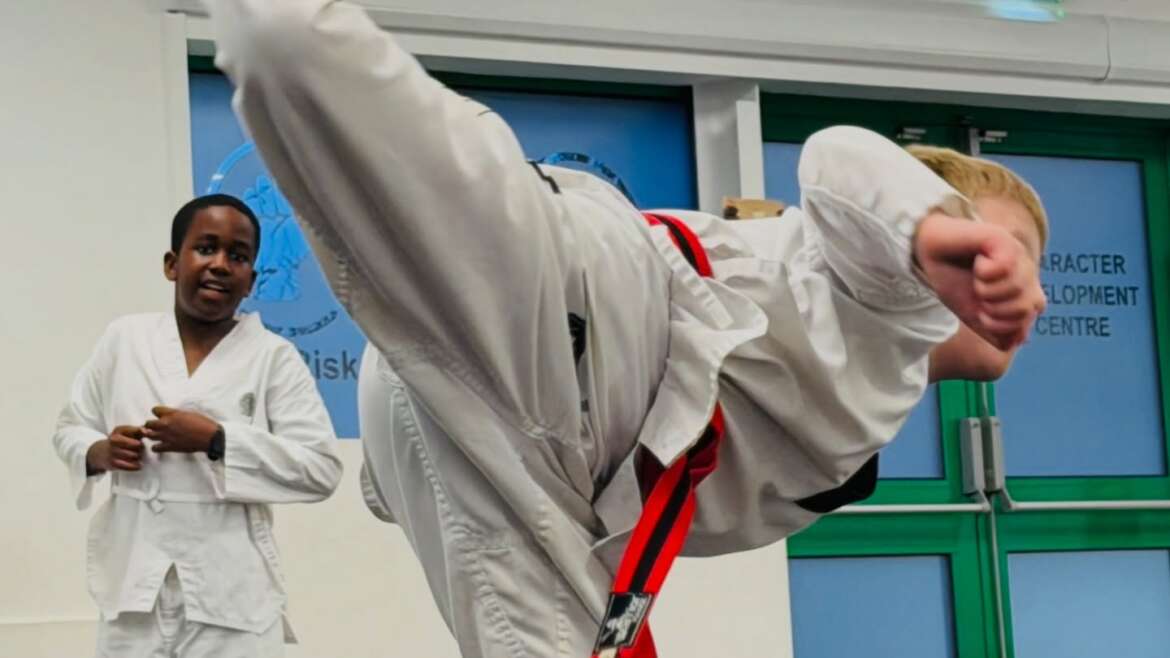
Our programmes are built around the three Cs, confidence, conduct and concentration, which are exactly what a child needs to walk into a big new school with their head up. Respect and routine are part of every session, and the exercise helps with mood and stress. Many children first train with us at a primary school club, so we run evening programmes for older students so they can keep training after they leave primary school.
You can find us at our Character Development Centre for Salisbury and Amesbury, at Monkton Prep School in Bath, and in Corsham, near Chippenham. If you would like to give your child that steady base before Year 7, book a free taster.
Key takeaways
- Moving from Year 6 to Year 7 brings many changes at once, so expect some tiredness and wobbles.
- Use the summer to practise the journey, organise kit and talk through worries.
- Keep activities, exercise and routines going to protect confidence and mood.
- Stay in touch with the school and act early if your child seems isolated or unhappy.
- A familiar community and mentor outside school gives children a steady base through the change.
Find your nearest club
Martial arts and character development programmes for children aged 4 and up, across Wiltshire, Somerset, Bath and North Dorset.
Try a free taster
See how The Warrior Academy builds confidence, focus and respect in children aged 4 and up, at our Salisbury centre and clubs across Wiltshire, Somerset, Bath and North Dorset.
Book a free tasterMore from the blog