

Every parent criticises. We have to. Children need to be told when they are rude, unsafe or unkind, and nobody learns without correction. The question is not whether we correct our children, but how, and how often.
Many of the parents I talk to grew up with a critical voice at home. Some of them hear that voice in their own heads to this day. They do not want to pass it on, yet under pressure they hear the same words coming out of their own mouths. If that sounds familiar, this article is for you. It is practical, and it is meant to help, not to add guilt.
How criticism becomes a child’s inner voice
Young children do not yet have a clear picture of who they are. They build it from what the important adults around them say. If most of what they hear is “why can you never”, “you always” and “what is wrong with you”, they slowly turn those words into beliefs about themselves.
By the time they are older, nobody needs to criticise them any more. They do it themselves. That inner voice says “do not bother, you will mess it up” before they try out for a team, put their hand up in a lesson or stand up to someone who is picking on them.
I was bullied as a child, and I know how quickly a child’s inner voice can turn against them. A child who already doubts themselves at home has far less armour when things get hard outside it.
Signs a child’s inner voice has become harsh
- They call themselves names like “stupid” or “useless” when they make a mistake.
- They give up quickly or refuse to try new things.
- They are very upset by small corrections, or they hide mistakes.
- They are anxious about getting things exactly right.
None of these signs on their own mean something is wrong. But if you see several of them often, it is worth looking at the messages they are hearing, and if you are worried about their wellbeing, talk to their school or your GP.
Separate the behaviour from the child
This is the single most useful change most families can make. Criticise what the child did, never who the child is.
- Instead of “you are so lazy”, try “your room needs tidying before screen time”.
- Instead of “you are mean to your sister”, try “snatching the toy was unkind. How can you put it right?”
- Instead of “you never listen”, try “I asked you twice to get your shoes on. I need you to do it now.”
The boundary is just as firm. The child still faces the consequence. What changes is that they learn “I made a poor choice” rather than “I am a bad person”. A poor choice can be fixed. A bad person cannot, so why would they try?
How to correct behaviour without crushing confidence
Keep it short
Long lectures rarely work. Children stop listening after the first sentence, and the message becomes a feeling of being attacked. Say what needs to change, say what happens next, and move on.
Get the ratio right
If most of your words to your child in a day are corrections, the relationship starts to feel like a court case. Make a deliberate effort to notice what they are doing well, and say it. Specific comments like “you waited your turn there, thank you” balance out the times you need to be firm.
Pick your battles
Not everything needs a comment. A wonky shirt or a messy drawing does not need fixing. Save your corrections for safety, kindness and the few habits that really matter to your family. Children respond better to a few clear rules than to constant small criticisms.
Correct in private where you can
Being told off in front of friends or siblings adds shame to the lesson. A quiet word, at their eye level, keeps the focus on the behaviour.
Ask, do not just tell
Questions like “what could you do differently next time?” put the child in charge of the fix. This builds responsibility and self-respect at the same time.
Repairing after you have been harsh
Every parent loses their temper. You will say things you regret, especially when you are tired or stressed. What matters most is what happens afterwards.
- Calm down first. Repair does not work while you are still angry.
- Go back to your child. Do not wait for them to come to you.
- Own your part. “I shouted and said you were useless. That was not true and it was not fair. I am sorry.”
- Keep the boundary. “The rule about hitting still stands. But I should have said it calmly.”
- Reconnect. A hug, a story or ten minutes doing something together tells them the relationship is safe.
Repair teaches children something powerful: adults make mistakes, take responsibility and put things right. That is exactly the kind of character we want them to grow into.
Look after your own inner voice too
If you grew up with a critical parent, be kind to yourself. Breaking a pattern takes time. Notice the phrases that come out when you are stressed, and choose one to replace this week. Write the new version down if it helps. Over time the new words become the automatic ones.
It also helps to have other adults in your child’s life who model calm, firm, respectful correction. Teachers, coaches and instructors can all be part of that.
How martial arts helps children build a stronger inner voice
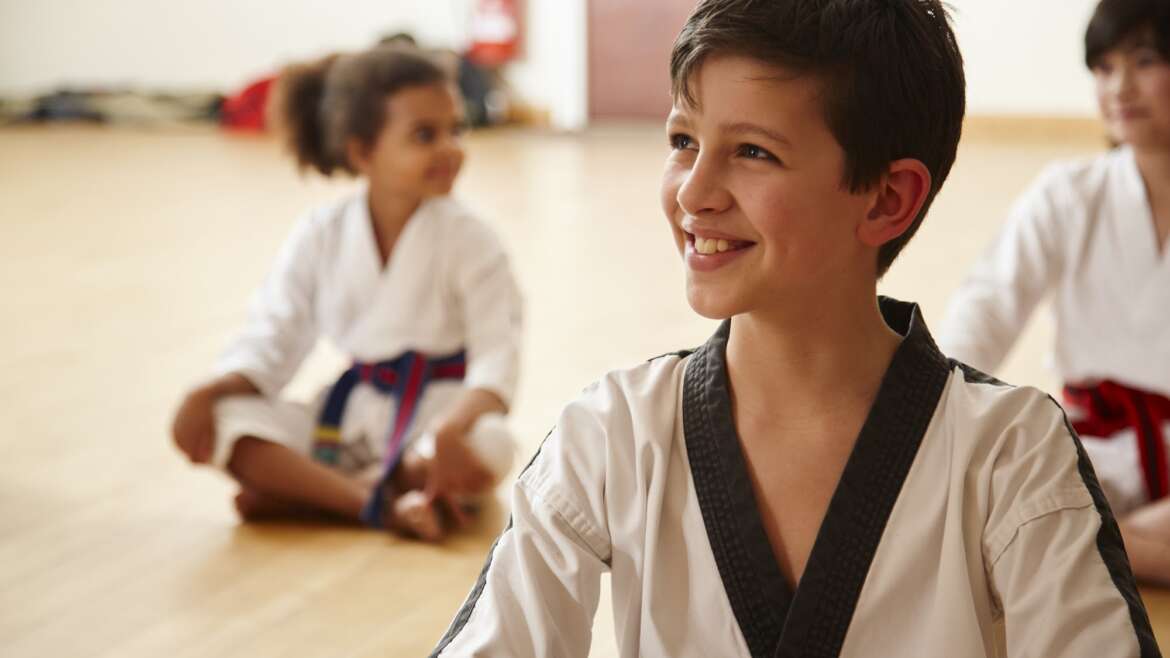
At The Warrior Academy we have been running small, personal programmes since 2011, built on the three Cs: confidence, conduct and concentration. Our instructors correct children every session, because that is how skills improve. But the correction is always about the technique or the choice, never the child.
A child who is told “turn your back foot out” a hundred times, and then gets it right, learns that correction is a step towards success, not a judgement. Gradings for each coloured belt reinforce this. Children see that feedback, practice and effort lead somewhere real.
You can see how this works in our programmes at our club in Bath (Combe Down), at Freshford for Bradford on Avon, or at Rode for Frome and Trowbridge, where it all began. The easiest first step is to book a free taster.
Key takeaways
- The way we correct children becomes the voice they use on themselves.
- Criticise the behaviour, never the child, and keep the boundary firm.
- Short, private, specific corrections work better than long lectures.
- Repair after a harsh moment teaches responsibility and keeps trust.
- Breaking a critical pattern takes time, so start with one phrase this week.
Find your nearest club
Martial arts and character development programmes for children aged 4 and up, across Wiltshire, Somerset, Bath and North Dorset.
Try a free taster
See how The Warrior Academy builds confidence, focus and respect in children aged 4 and up, at our Salisbury centre and clubs across Wiltshire, Somerset, Bath and North Dorset.
Book a free tasterMore from the blog