

The most effective discipline teaches rather than punishes. The word itself comes from the Latin for learning, and that is the whole point: helping your child understand what to do, why it matters and how to make a better choice next time.
In practice, effective discipline rests on a strong relationship, clear boundaries agreed in advance, consequences carried through calmly and plenty of praise for good choices. It is less about reacting to bad behaviour in the moment and more about building the habits and the moral compass that prevent it.
Here is how to make that work at home, step by step.
Start with affection and attention
Children who feel connected to their parents are far more willing to listen to them. Much of what we call misbehaviour is a child looking for attention, and if they cannot get it by being good, they will get it by being difficult.
So the first step in discipline is not a rule at all. It is regular, focused time together. Ten minutes of undivided attention, playing their game or chatting about their day with your phone away, fills up their tank. A child with a full tank is much easier to guide when it matters.
Catch them being good, too. A hug, a smile or a simple “I loved how you helped your brother” tells them which behaviour gets noticed.
Understand your child’s triggers and prepare for them
Most difficult behaviour is predictable. Think about when things usually go wrong in your house. Common triggers include:
- Hunger or tiredness, especially after school.
- Transitions, such as switching off a screen or leaving the park.
- Boredom or long waits.
- Feeling rushed, overlooked or out of control.
Once you know the triggers, plan for them. Have a snack ready at pick up. Give a five minute warning before screen time ends. Take something to do in the waiting room. Prevention is always easier than repair.
Set clear boundaries and agree consequences in advance
Children cope best when they know exactly where the lines are. Keep your family rules few, simple and positive: “We speak kindly”, “We put our things away”, “We keep our hands to ourselves”.
Agree the consequences before anything happens, when everyone is calm. “If the tablet comes out at the dinner table, it goes away for the rest of the evening.” The consequence should be related to the behaviour, proportionate and something you are genuinely willing to carry out.
Then, when the line is crossed, follow through calmly. No shouting, no long lecture, no extra threats. “You chose to use the tablet at dinner, so it’s going away now.” The calmness is what makes it work. A consequence delivered in anger feels like a punishment; a consequence delivered calmly feels like the natural result of a choice.
Choose your battles
If every small thing becomes a fight, your child stops hearing you. Decide what really matters, usually safety, kindness and respect, and hold firm on those every time. Let smaller things, like a mismatched outfit or a messy craft table, go or deal with them lightly.
Fewer, firmer boundaries carry far more weight than a long list of rules that are only sometimes enforced.
Praise character, effort and good choices
Praise is one of the most powerful discipline tools you have, but the type of praise matters. “Good boy” or “clever girl” tells a child very little. Specific praise tells them exactly what to repeat:
- “You stayed calm when you lost the game. That showed real self-control.”
- “You told me the truth even though it was hard. I’m proud of your honesty.”
- “You kept trying with that homework when you wanted to give up.”
Praising character and effort, rather than results or looks, builds children who want to do the right thing because of who they are becoming.
Redirect boredom and frustration with purpose
A lot of challenging behaviour comes from children who are bored, frustrated or feel they have no control. Give them purpose and a little autonomy. Let them choose between two acceptable options: “Would you like to tidy your books first or your toys?” Give them real jobs, like helping to cook or looking after a pet. Channel restless energy into physical activity.
When a behaviour keeps repeating, listen for the message behind it. A child who is always pushing at bedtime might be anxious about the dark. A child who lashes out at a sibling might feel left out. Fixing the cause is far more effective than punishing the symptom.
Turn mistakes into teachable moments
Once everyone is calm, come back to what happened. Ask rather than tell:
- What happened?
- How do you think the other person felt?
- What could you do differently next time?
- Is there anything you can do to put it right?
These conversations are where real learning happens. Over time they help your child develop their own moral compass, so they make good choices even when you are not there to see.
How martial arts helps with discipline
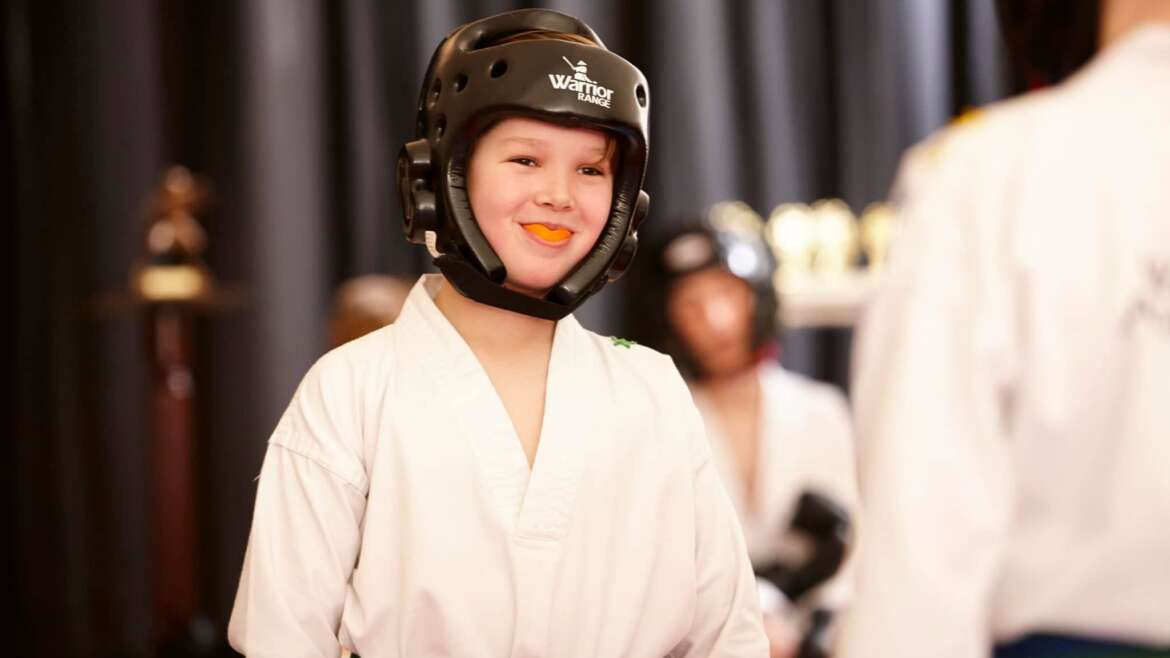
A good martial arts programme is discipline in the truest sense: it teaches. Children learn to bow, listen to their instructor, wait their turn, follow a sequence and treat their training partners with respect. The expectations are clear and consistent, the praise is specific, and children see that effort and good conduct are what move them towards their next coloured belt at grading.
Conduct is one of our three Cs, alongside confidence and concentration, and parents often tell me the habits their child builds on the mat start showing up at home. We run programmes for children aged four and up at our Character Development Centre in Salisbury and Amesbury, at Motcombe for families in Shaftesbury and Gillingham, and in Freshford, near Bradford on Avon. The easiest way to see it in action is to book a free taster session.
Key takeaways
- Discipline means to teach, not to punish.
- Connection and attention come first; a connected child is easier to guide.
- Know your child’s triggers and plan for them before they happen.
- Agree clear boundaries and consequences in advance, then follow through calmly.
- Praise character and effort, choose your battles, and use mistakes as teachable moments.
Find your nearest club
Martial arts and character development programmes for children aged 4 and up, across Wiltshire, Somerset, Bath and North Dorset.
Try a free taster
See how The Warrior Academy builds confidence, focus and respect in children aged 4 and up, at our Salisbury centre and clubs across Wiltshire, Somerset, Bath and North Dorset.
Book a free tasterMore from the blog